Steel Pipe
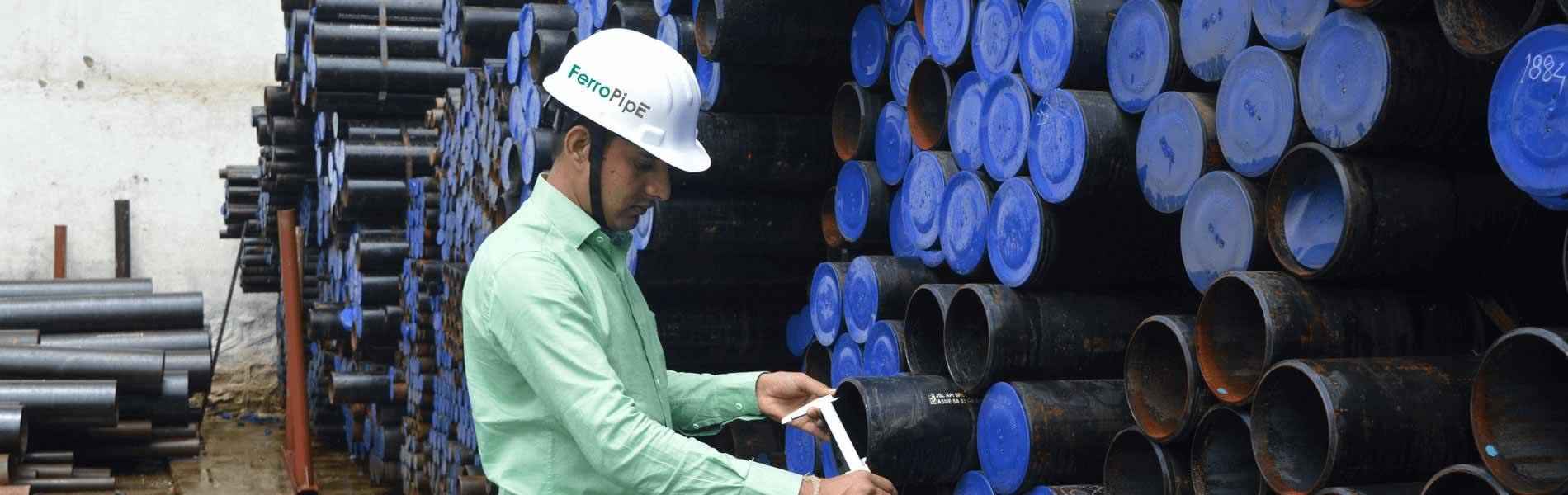
Steel Pipe are used to transport gases or fluids so it is important to
know the capacity of the pipe. Here the internal cross-sectional area is important. It’s
therefore not surprising that steel pipe are specified by the inside diameter. It is common to
identify pipe in inches by using NPS or “Nominal Pipe Size”. The metric equivalent is
called DN or “diameter nominal”. The metric designations conform to International
Standards Organization usage and apply to all plumbing, natural gas, heating oil, and miscellaneous
piping used in buildings. A plumber always knows that the ID on the pipe label is only a *nominal*
ID.
Pipe is a hollow tube with round cross section for the conveyance of products. The products include
fluids, gas, pellets, powders and more. The word pipe is used as distinguished from tube to apply to
tubular products of dimensions commonly used for pipeline and piping systems. In the world of
piping, the terms pipe and tube will be used. Pipe is identified as “Nominal Pipe Size”
(NPS), with wall thickness defined by “Schedule number” (SCH).
We, At ferropipe deal in two basic steel pipe in accordance with the grades and applications:
Most pipe are of carbon steel (depending on service) are manufactured to different ASTM and ASME standards.
Carbon Steel Pipe is strong, ductile, weld able, machinable, reasonably, durable
and is nearly always cheaper than pipe made from other materials. If carbon-steel pipe can meet the
requirements of pressure, temperature, corrosion resistance and hygiene, it is the natural
choice.Iron pipe is made from cast-iron and ductile-iron. The principal uses are for water, gas and
sewage lines.
Alloy Steel pipe are used at high temperature and high fatigue application
areas.Due to the presence of chrome and molybdenum it is also known as chrome moly steel pipe.Alloy
steel pipe are expensive as compared to carbon steel pipe due to addition of alloying element. These
pipe are used for high temperature application including pressure vessels, boilers and heat
exchangers.
Steel pipe combines high strength and ductility, which allows higher operating pressures, stresses
and strains without breaking from water hammer and surge that may occur due to natural man-made
disturbances. Steel pipe is preferred because of its lightweight and availability in longer lengths.
As such, it can be economically transported longer distances. A key advantage to steel pipe is that
it is easy to fabricate, which allows it to be engineered and manufactured into various sizes,
shapes and configurations.